
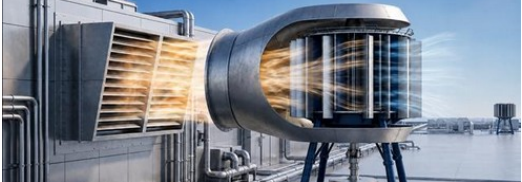
Data & AI Centres
Cooling airflow already creates usable movement.
We assess whether suitable exhaust airflow can support useful generation without hurting cooling performance.
Our focus is on sites where compact onsite generation can complement existing infrastructure and create a measurable net benefit.
Each application is assessed individually based on site engineering, airflow or wind opportunity, electrical architecture, and expected operational benefit.
We assess whether suitable exhaust airflow can support useful generation without hurting cooling performance.
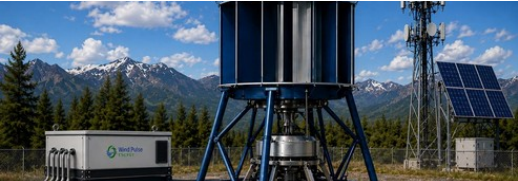
Factories, warehouses, and large facilities can benefit from extra onsite generation and improved resilience.

Useful for weak-grid, off-grid, telecom, and remote assets where continuous diesel use is costly or limiting.
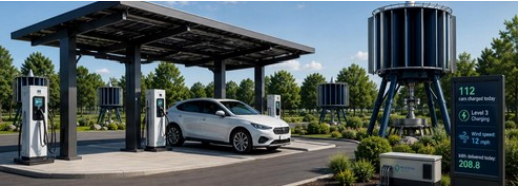
Generation can complement solar, reduce grid draw, and support charging-site storage strategies.
Rapidly deployable power for field operations, disaster recovery, and critical sites where fuel logistics are difficult. Pad, skid, and container deployment formats can support remote or temporary operations, subject to mission requirements, site conditions, and technical validation.
Every opportunity starts with the physical conditions, electrical setup, and expected net benefit at the site.
Designed for places where tower-mounted wind may not be practical or where space efficiency matters.
If a site cannot show a real net benefit, it should be identified early before pilot investment.
Tell us the site type, infrastructure conditions, and energy challenge and we can help decide whether the platform is worth assessing further.